The Kunbi weave: Goa’s original textile.
Long before Goa was known for its beaches and Portuguese-era villas, it was home to the Kunbi and Gaunkar communities — its original cultivators, who tilled the land and wove their own cloth from it.
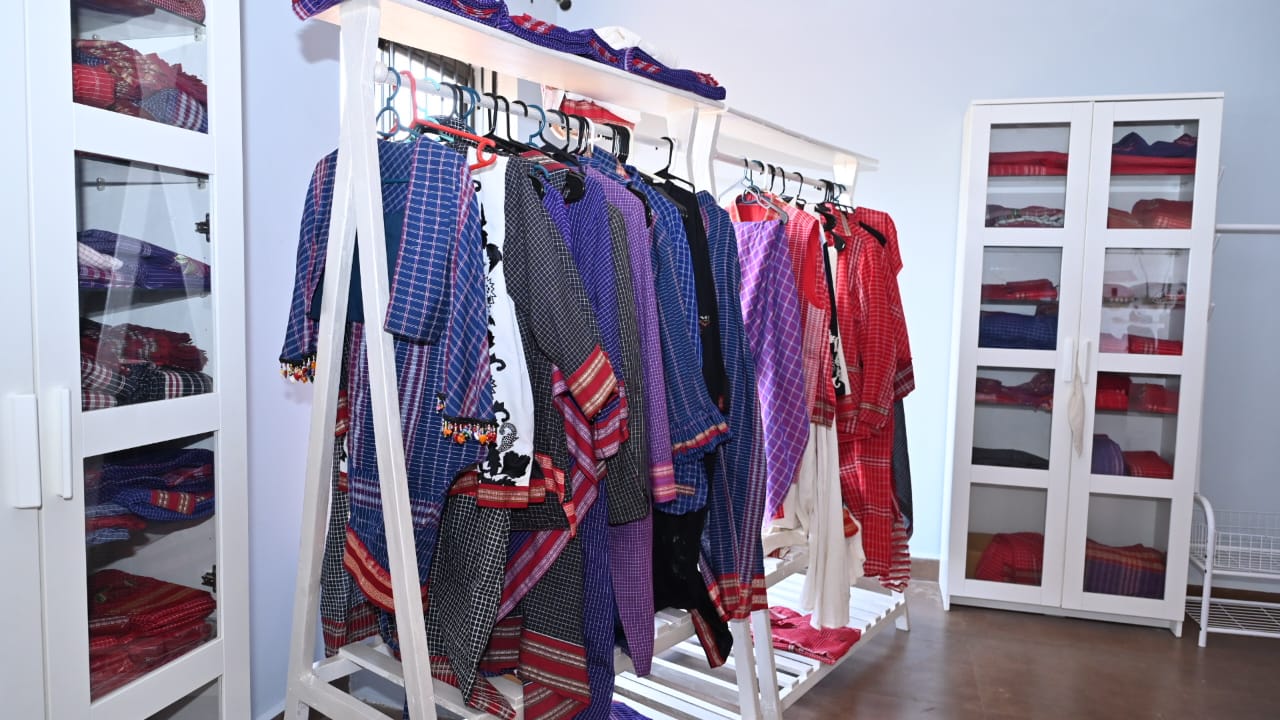
“A textile tradition woven by hand, carried through stories and embedded in the rhythm of Goan life.”
The name ‘Kunbi’ is thought to come from Konkani words for ‘people’ and ‘seed’, a fitting root for a textile handed down thread by thread through families.
No one can date the weave precisely; it predates the roughly 450 years of Portuguese colonial rule, and survived quietly through it. As Western dress took over daily life in Goa, this once-common sari receded almost entirely from view.
Built for work, not ceremony.
The Kunbi sari was cut shorter than a standard drape, closer to four or five yards rather than six, and worn without a petticoat so a woman could move freely through a paddy field.
Colour marked a woman’s stage of life: brighter shades for youth, red for marriage, deeper maroons and blacks for age and mourning.
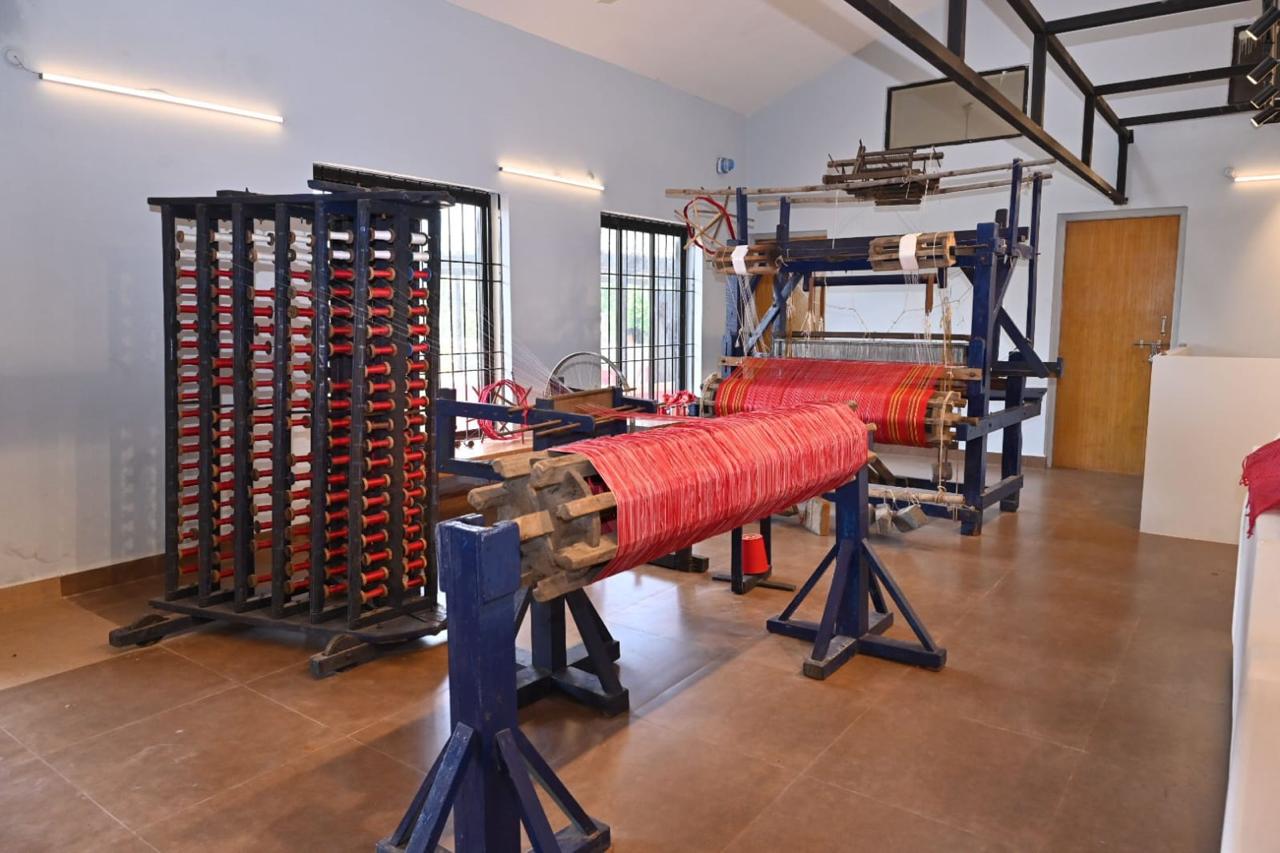
Simple structure. Distinctive hand.
Every Kunbi sari began on a simple pit loom in pure handspun cotton. Its plain over-and-under structure became distinctive through the weaver’s own hand.
Naturally rooted.
The signature red came from madder root and cashew apple; darker shades came from iron-rich mud and tree bark, while natural yellow came from turmeric.
These natural dyes were gentle on the skin and helped prevent rashes and irritation. A woven border, often rust brown and edged with a small white flower motif, finished each drape.
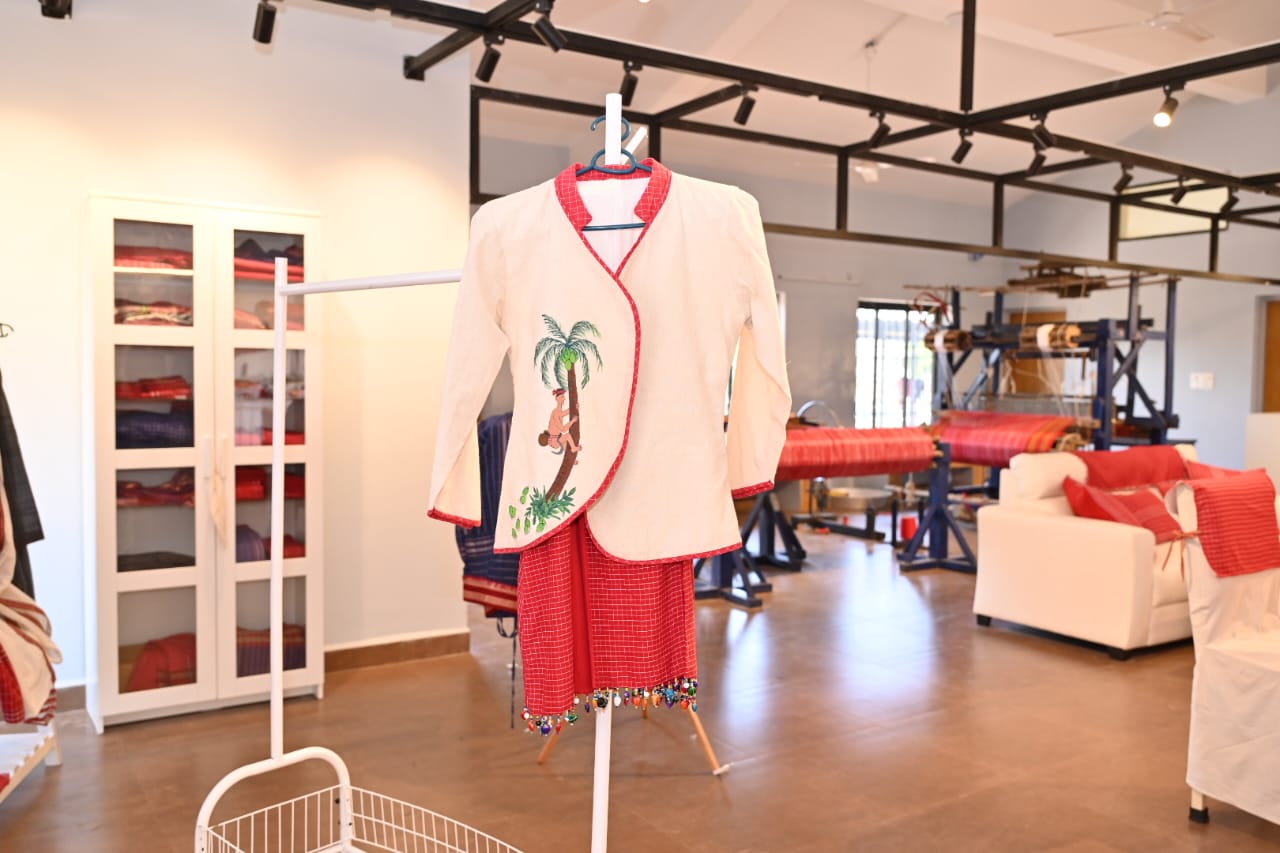
Bold geometric checks. Coarse handspun cotton. A plainspoken beauty shaped entirely by hand and place.
What sets the Kunbi weave apart